What is White Clover?
White clover, scientifically known as Trifolium repens, is a common perennial plant ubiquitous in many lawns across North America. Recognized by its trifoliate leaves and small white flowers, clover often flourishes in a variety of lawn conditions, including those that may not support traditional grass. Though it offers some aesthetic appeal and ecological benefits, its robust growth nature can lead it to become invasive.
Characteristically, clover is resilient and can thrive in poor soil conditions due to its ability to fix nitrogen, leading many to inadvertently appreciate its presence. However, its aggressive spread can overwhelm desirable grass types, resulting in a patchy lawn appearance. Additionally, clover’s ability to adapt to various mowing heights can make it particularly challenging to manage effectively.
Why Clover Can Be Problematic
The presence of clover in a lawn, while sometimes visually appealing, often indicates underlying soil issues such as low fertility, compacted soil, or imbalanced pH. It’s considered a broadleaf weed due to its ability to quickly colonize areas, outcompeting grass for sunlight and nutrients. Additionally, clover’s tendency to establish itself in dense mats can suffocate grasses, leading to reduced lawn vitality over time.
Moreover, for those who prefer a uniform grass lawn, the texture, color, and growth patterns of clover can disrupt the smooth green patch desired by many. Clover also interacts with other broadleaf weeds, potentially complicating systematic lawn weed control strategies as it often serves as a haven for insects beneficial or detrimental to lawn health.
Identifying Clover in Your Lawn
Identifying clover involves examining the leaf structure and flowering pattern. The hallmark three-leaf pattern, often accompanied by a faint V-shaped watermark, makes it distinguishable from other broadleaf weeds. White clover blooms with small clusters of white flowers from spring through fall, making it relatively easy to spot among typical lawn grass.
Regular weed control service evaluations can help in accurately identifying clover infestations, allowing homeowners to decide on tailored treatment solutions. By understanding and recognizing clover’s early signs, one can employ preventative measures before it dominates the lawn landscape entirely.
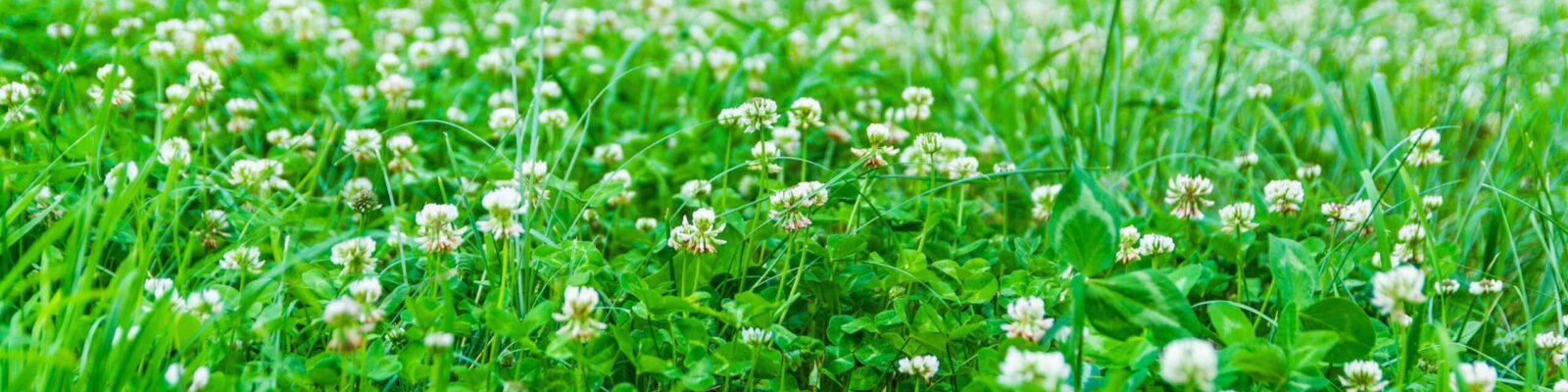
Close-up view of white clover flowers growing throughout a residential lawn. The flowering weeds spread across the green grass with a wooden fence visible in the blurred background, illustrating commo
Cultural Control Methods
Cultural control methods focus on maintaining optimal lawn conditions to discourage clover growth. Ensuring your lawn is kept healthy through adequate fertilization, watering practices, and regular mowing can effectively diminish clover competitiveness. Increasing lawn grass density by overseeding can reduce areas where clover would otherwise thrive.
Additionally, adjusting the mowing height to maintain a taller grass canopy can naturally inhibit clover by shading it and limiting its photosynthesis capabilities. For best results, implement these practices alongside other control techniques to enhance their effectiveness in managing dandelion control and similar concerns.
Chemical Control Options
Chemical control options are effective for persistent clover problems.
Pre-emergent Herbicides: These prevent clover seeds from germinating in the early stages.
Post-emergent Herbicides: Applied to actively growing clover to eradicate existing plants.
Selective Herbicides: Target broadleaf weeds like clover without harming grass.
Non-selective Herbicides: Kill all plant life in the treated area, used for severe coverage.
Natural Herbicides: Organic solutions, such as corn gluten meal, hinder clover growth.
Spot Treatments: Local applications directly to clover patches to minimize chemical use.
Repeat Applications: Necessary for stubborn infestations and to prevent resurgence.
Integrating Control Methods
Combining different control methods can lead to the most comprehensive approach in managing clover and other lawn weeds. By integrating cultural and chemical controls, you can effectively target clover at every stage of its growth cycle, from prevention to eradication. Such synergy ensures a more sustainable and long-term solution to maintaining a clover-free lawn.
Consider coupling these methods with strategies for nutsedge control and other weeds to enhance the overall health of your lawn ecosystem. Regular assessment and adaptation are essential to sustain success and minimize clover incursions.
Proper Lawn Maintenance
Maintaining a healthy lawn is crucial in preventing clover regrowth after initial control efforts. Regular lawn maintenance practices such as mowing, watering, and aeration can improve grass density, thus reducing clover presence. Mow your lawn to the recommended height for the specific grass type, cutting no more than one-third of the grass blade height per mowing session.
By ensuring consistent care, you create less favorable conditions for clover, reducing its ability to take hold and spread.
Fertilization and its Role
Fertilization plays a significant role in strengthening grass and minimizing clover presence. Applying the correct type and amount of fertilizer helps provide necessary nutrients, contributing to lush, vigorous growth that outcompetes clover. Consider soil tests to determine nutrient needs and tailor fertilization schedules to maximize lawn health.
Implementing appropriate nutrition plans reduces susceptibility to clover, ensuring your grass remains robust and resists pest invasions.
Mowing Practices
Strategic mowing is essential for healthy lawn upkeep. Keep mower blades sharp to ensure clean cuts, as torn grass blades can promote disease and inhibit growth. Adjust mowing frequency based on growth patterns, and opt for a higher mowing height to enhance grass tolerance and shade out potential clover growth.
Finally, ensuring your lawn receives adequate moisture is critical in sustaining its resistance to clover and preventing problems like grass turning yellow.
Eco-Friendly Lawn Solutions
Commit to green. Our eco-friendly services enhance lawn health while protecting the environment.
Benefits of Clover
Despite its often unintended presence, clover boasts numerous benefits for lawn ecosystems. Known for its ability to fix nitrogen, clover improves soil fertility, reducing the need for chemical fertilizers. It also enhances lawn resilience to environmental stressors, such as drought and pests. Due to its natural low height, clover maintains a lush appearance with minimal maintenance.
This ecological contribution can enhance the overall sustainability of lawn care practices.
Clover’s Role in Nitrogen Fixation
Clover aids in nitrogen fixation, a natural process that converts atmospheric nitrogen into a form plants can utilize. This ability enriches soil quality by providing essential nutrients, fostering healthy lawn grass growth. This process means less reliance on synthetic fertilizers, leading to cost efficiency and environmental conservation.
Understanding this role helps balance clover management with the broader goals of maintaining healthy lawn ecosystems.
Drawbacks of Clover in Lawns
While clover’s benefits are noteworthy, its drawbacks in lawns are also considerable. The dense growth and persistence can overwhelm other grass species, causing uniformity concerns among those who prefer traditional lawn aesthetics. Additionally, clover is hard to eliminate once established, necessitating ongoing management strategies.
Uncontrolled clover can attract pests like ticks, increasing maintenance challenges.
Balancing Lawn Health with Biodiversity
Balancing clover management with biodiversity fosters a healthier lawn environment. Allowing some clover can serve beneficial services, while focused control strategies can mitigate its competitive drawbacks. This balance supports both lawn aesthetics and ecosystem services.
Achieving this balance involves strategic monitoring and integrating practices like white grub control, contributing to a robust lawn care program.
Long-term Prevention Strategies
Implementing long-term strategies is vital for preventing clover regrowth and maintaining a healthy lawn. While initial control measures focus on eliminating existing clover patches, preventive practices ensure reduced recurrence. Comprehensive strategies that integrate various approaches contribute significantly to sustainable results.
Regular Lawn Aeration: Facilitates proper air, water, and nutrient circulation in the soil.
Optimal Watering Practices: Promotes deep root systems by watering deeply but infrequently.
Use of Mulches: Helps suppress weed growth by covering exposed soil.
Continuous Monitoring: Regular inspections to detect and address early signs of clover.
Adapting Lawn Care Practices: Adjust techniques according to seasonal needs to maintain lawn vitality.
Engaging Professional Help: Regular services by experts ensure comprehensive care and management.
Seasonal Considerations
Different seasons require varied approaches in lawn care for keeping clover at bay. Spring and fall are ideal for implementing fall weed control measures as they coincide with active growth periods. Consider scheduling aeration and fertilization during these times to reinforce lawn health.
By adapting strategies to seasonal demands, you enhance overall resilience against clover incursions year-round.
Final Thoughts on Clover Control
Ultimately, controlling clover requires a multifaceted approach that encompasses immediate and preventive measures. A consistent combination of cultural practices, chemical applications, and professional interventions ensures you maintain a vibrant, clover-free lawn. By viewing clover management as part of a holistic lawn care regimen, you can achieve sustainable aesthetic and ecological benefits.
Additionally, regular use of professional services helps manage expectations and ensures continued lawn health.

Happy family playing together on a vibrant, healthy green lawn during summer. Children enjoy water spray from hose while mother supervises on well-maintained yard, demonstrating professional lawn care
Key Takeaways for Clover Control
Managing clover effectively involves understanding and implementing a series of strategic practices that cultivate healthy lawns while preventing unwanted plant growth. Below are essential takeaways.
Identify and Treat Early: Act swiftly upon detection to reduce spread and reestablish control.
Maintain Lawn Health: Healthy lawns are naturally resistant to clover invasions.
Utilize Integrated Pest Management: Combine various methods for holistic control of chinch bugs and other pests.
Follow Seasonal Lawn Care Tips: Adapt maintenance techniques to meet lawn needs throughout the year.
Consider Professional Services: Expert advice and treatment ensure effective long-term solutions.
Document Your Lawn’s Health: Monitor growth patterns and conditions to optimize care.
Stay Informed About Lawn Care Innovations: Keep up with new tools and techniques for efficient management practices.
Resources for Further Information
For ongoing education and support in lawn management, consider visiting resources dedicated to gardening and professional lawn care. These provide insights into when and how to tackle issues like pre-emergent applications for best results.
Engaging with Lawn Care Experts
Engaging professionals allows access to tailored solutions that meet specific lawn care needs, ensuring comprehensive management of clover and other common lawn challenges. These experts offer valuable perspectives and solutions, helping lay the foundation for vibrant lawn ecosystems.
Clover in Lawn: Control Methods FAQ
Effective clover control involves a mix of fertilization and weed control methods. Begin by improving your lawn's density and health through regular fertilization, using nitrogen-rich products to favor grass over clover.
Spot-treat clover patches with a selective herbicide and maintain a mowing height that keeps grass at an advantage. These integrated practices will promote a lush lawn that minimizes clover invasion.
While preventing clover completely is challenging, effective clover control can significantly reduce its presence. The key is to maintain a healthy, thick lawn that naturally discourages weeds, including clover.
Use a combination of cultural practices, such as mowing at the right height, regular fertilization, and adequate watering, paired with timely herbicide applications. This layered approach offers the best chance of keeping clover at bay.
The frequency of applying herbicides largely depends on your lawn's specific needs and infestation levels. Post-emergent herbicides are generally applied when weeds are actively growing, usually in the warmer months.
Knowing when to put down pre-emergent is crucial, usually in early spring or fall, to prevent weed seeds from germinating. Always adhere to label directions to avoid damaging your lawn, and consider herbicide rotation to prevent resistance.
Eco-friendly options for clover control include improving overall lawn health and density through regular mowing, appropriate fertilization, and overseeding with native grass species.
You can also use organic weed killers made from natural ingredients like vinegar or corn gluten meal, which can help suppress clover growth without harming the environment. These methods combined create a holistic clover control strategy.
If clover keeps returning, your lawn may need ongoing clover control measures. Implement a consistent approach of regular mowing, proper fertilization, and timely herbicide applications.
Identify any underlying issues, such as soil nutrient imbalances, that may be allowing clover to thrive, and adjust your lawn care practices accordingly to create an environment less favorable to clover.
Yes, you can overseed your lawn while treating for clover. Begin with an effective clover control regimen, such as using a targeted herbicide, before overseeding.
Ensure the area is well-prepared by mowing and removing excess clover foliage. Overseeding afterward with a compatible grass seed will enhance lawn treatment efforts by promoting a denser lawn that naturally suppresses clover growth.
Clover, while often considered a weed, can actually have positive effects on your lawn's overall health. As a nitrogen-fixing plant, clover can improve the soil's nutrient levels and reduce the need for synthetic fertilizers.
However, if you prefer a uniform grass appearance, clover control methods may be necessary. Maintaining healthy grass with regular mowing and nutrient management can help limit clover's spread.